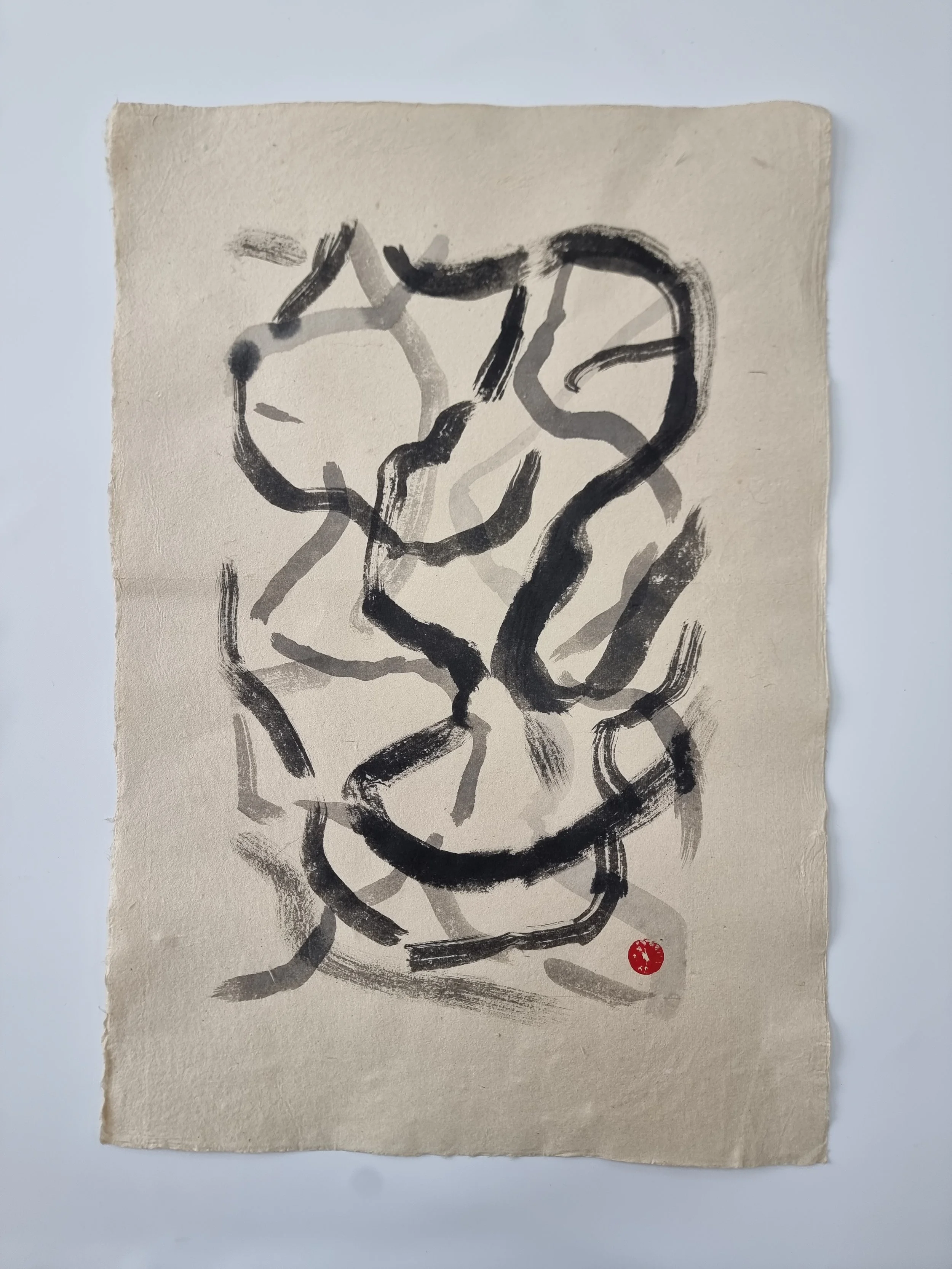
EAST OF MY NAME
East of My Name is an ongoing body of work that began following my relocation from Europe to Vietnam in 2025. Created on handmade Vietnamese dó paper using ink and mixed media, the series emerged from a need to reconnect with making during a period of transition, uncertainty, and cultural adaptation. At a time when familiar routines, materials, and surroundings had been left behind, the act of creating became both a way of orientating myself within a new landscape and a means of re-establishing a creative practice.
Through a visual language of gesture, repetition, interruption, and space, I explore themes of movement, memory, belonging, and presence. Rather than illustrating specific events or places, the works reflect experiences of navigating unfamiliar territory—both external and internal. Each mark functions as a trace of attention, a response to place, and a record of moments encountered while adjusting to a different rhythm of life.
Working with handmade dó paper has become an essential part of the process. Unlike the surfaces I had previously used, the paper responds unpredictably to ink, allowing it to spread, settle, and travel through its fibres in unexpected ways. Instead of resisting these qualities, I began to work with them, allowing chance and material behaviour to shape the outcome. This dialogue between intention and unpredictability mirrors many aspects of relocation itself: learning to adapt, letting go of control, and remaining open to what emerges.
Movement plays a central role within the work. Many of the gestures are created through a physical process informed by my parallel practice in dance, where rhythm, breath, balance, and bodily awareness influence the way marks are made. The brush becomes an extension of movement, translating shifts in energy, pace, and attention into visible traces on paper. In this way, drawing and painting become not only visual acts but embodied ones, rooted in presence and the relationship between body, gesture, and space.
The series unfolds through a number of interconnected suites, each representing a different stage within an ongoing journey. From beginnings and departures, through fragmentation, resistance, memory, and return, the works gradually move towards greater openness and stillness. Recurring lines, circles, interruptions, and red marks form a visual vocabulary that evolves throughout the project. The red marks are derived from the initials of my name—T and SH—reinterpreted as abstract symbols that move between personal reference and universal sign. At times the gestures suggest pathways, crossings, boundaries, pauses, or points of orientation; at others they remain deliberately open, inviting personal interpretation.
While rooted in my own experience, East of My Name is not a narrative of relocation alone. It is an exploration of what it means to inhabit change, to find continuity within uncertainty, and to rediscover a sense of home through attention, presence, and the act of making. Through the simplicity of ink, paper, gesture, movement, and breath, the project reflects on how identity is continually reshaped by movement, encounter, and place—and how home may ultimately be found not in a fixed location, but in a way of seeing, creating, and being present.
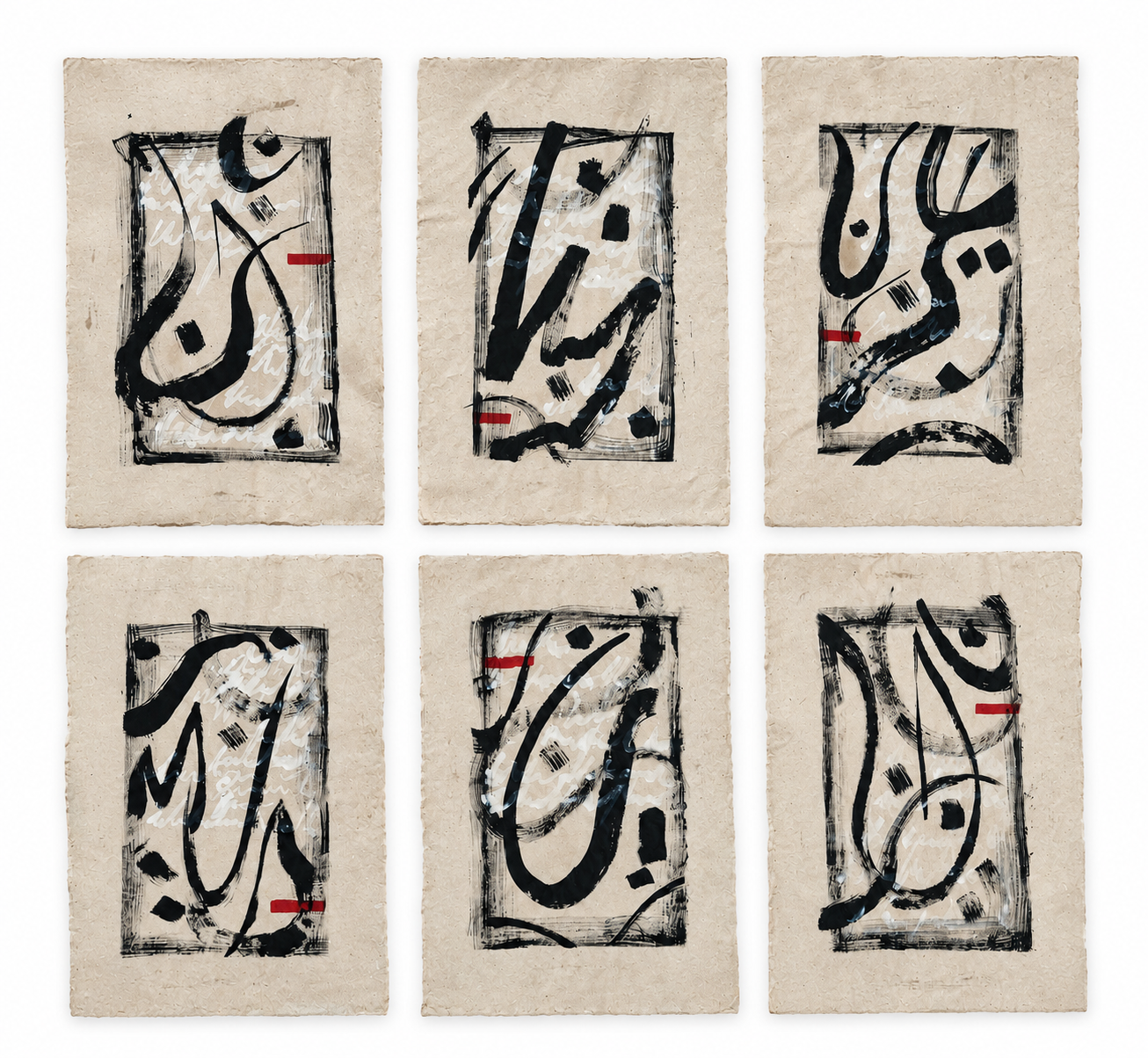
RED LINE: Agesture of beginning
Red Line: A Gesture of Beginning marks the starting point of East of My Name. Created shortly after my arrival in Vietnam, the suite emerged from a desire to make without expectation and to reconnect with creativity after a period of transition. The red line functions as both a physical mark and a symbolic threshold—a first step into unfamiliar territory.
At the time, I was navigating a new country, language, rhythm of life, and creative environment. Rather than planning images, I focused on the simple act of making a mark and observing where it might lead. The works explore the courage required to begin before knowing the outcome, embracing uncertainty as an essential part of both artistic practice and relocation.
The red gesture becomes a pathway, a direction, and a declaration of presence. It represents the moment when hesitation gives way to action, when the blank surface becomes a place of possibility rather than fear. The suite reflects the understanding that every journey begins with a single gesture.
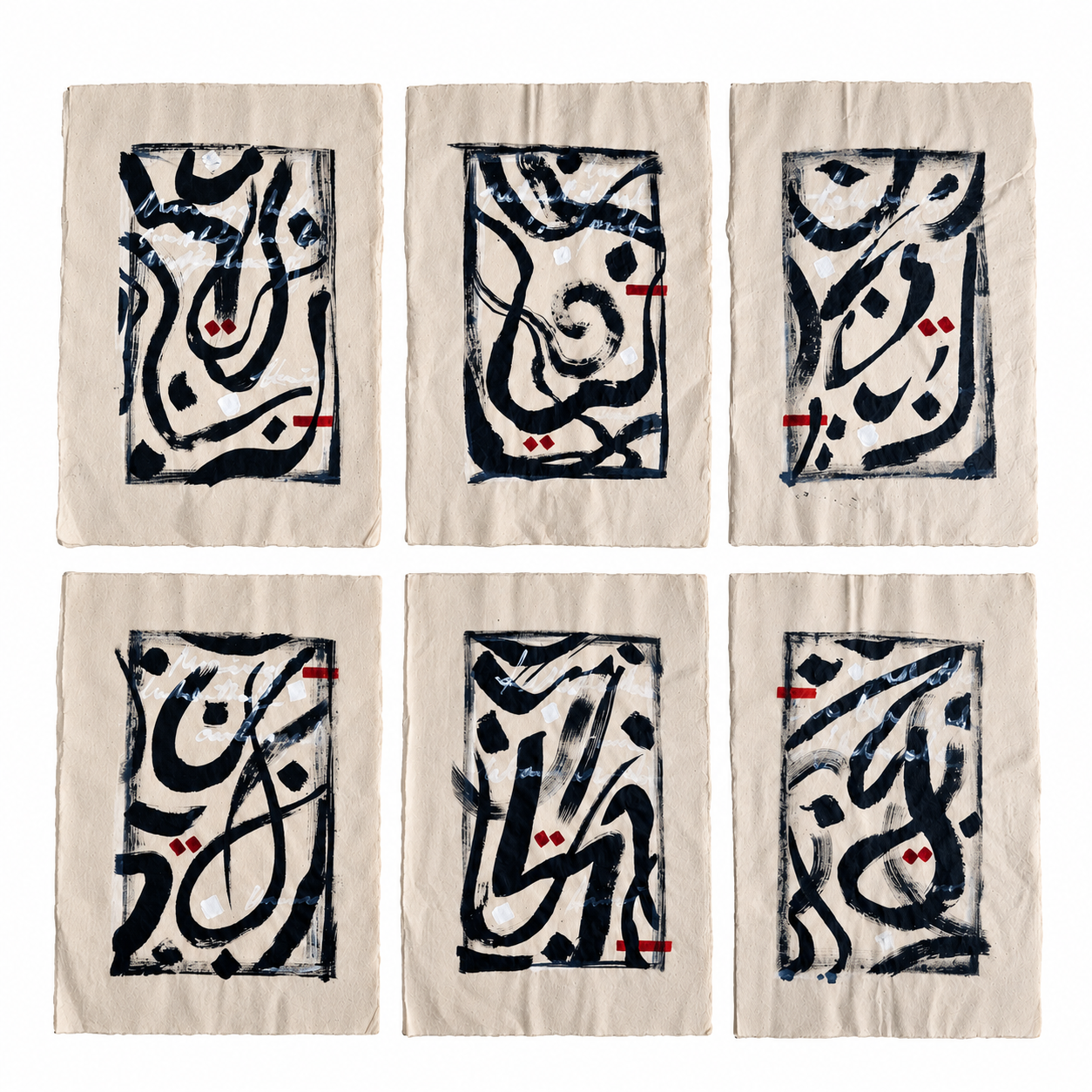
TWO RED DOTS: Between here & before
This suite explores the space between departure and arrival, between what has been left behind and what has not yet fully taken shape. The two red dots act as markers of distance and connection, representing two points that exist in relation to one another—past and present, familiar and unfamiliar, there and here.
Created during the early months of settling into life in Vietnam, these works reflect the experience of inhabiting an in-between state. Memories of previous places, routines, and relationships remain present, while new experiences gradually begin to form their own significance. Rather than choosing between these realities, the works acknowledge the coexistence of both.
The gestures move across the surface as if searching for orientation, negotiating the distance between different versions of home. The suite embraces transition as a space of possibility, recognising that identity is often formed not in certainty, but in the spaces between.
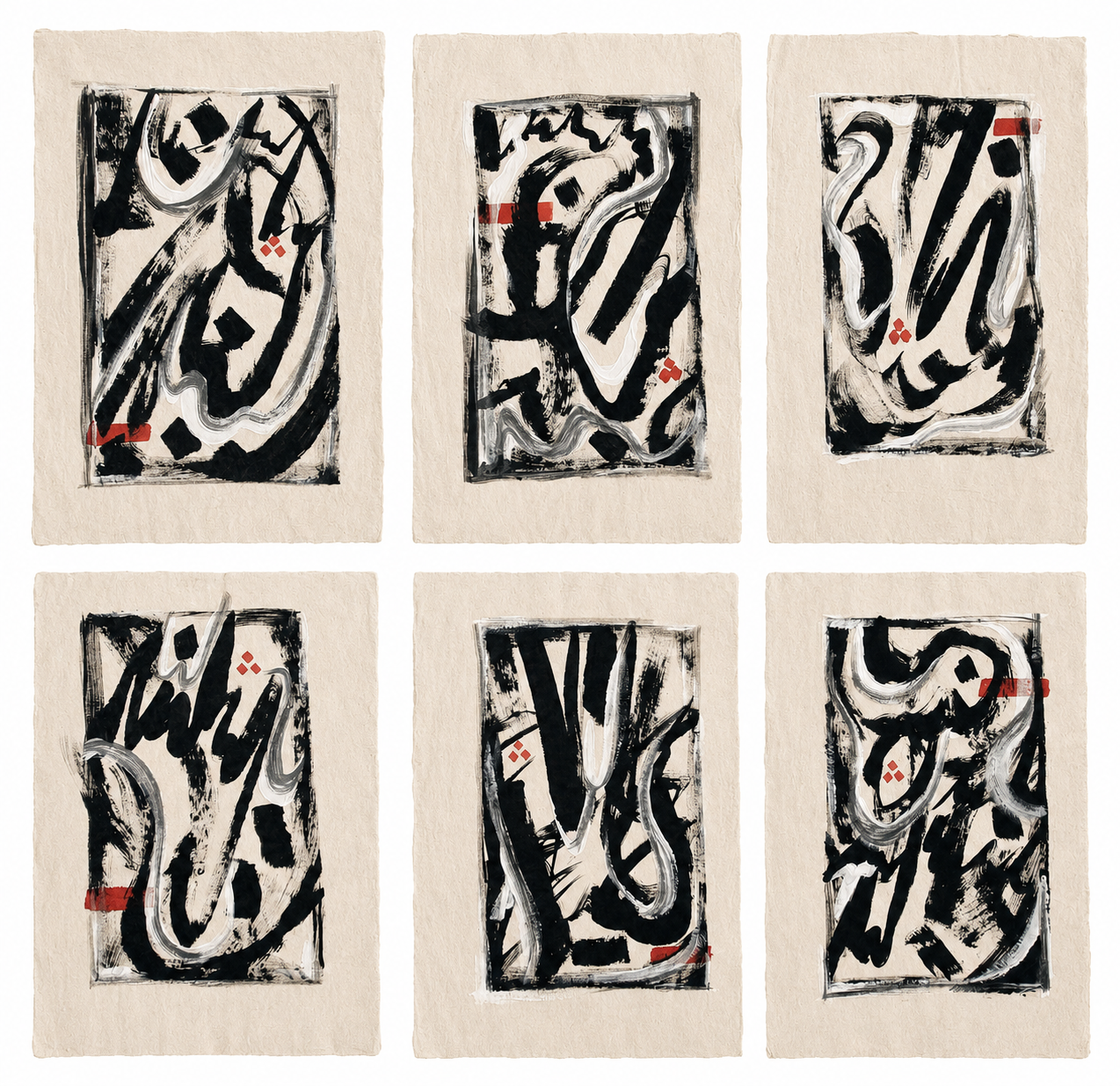
THREE RED DOTS: Gestures towards home
In this suite, the search begins to shift from external place towards an internal sense of belonging. The three red dots are derived from the sound "SH" within my initials, becoming personal symbols that operate beyond language. They function as points of attention, direction, and return.
The works were created during a period when Vietnam was beginning to feel less unfamiliar and daily life was finding a new rhythm. Rather than asking where home is, the suite asks how home is experienced and carried. Through repeated gestures, pathways, and pauses, the works suggest movement towards something that remains partially defined and continually evolving.
For me, home is not a fixed location but a relationship between memory, creativity, body, and presence. The gestures within these works are less concerned with arrival than with the ongoing process of finding and creating belonging.
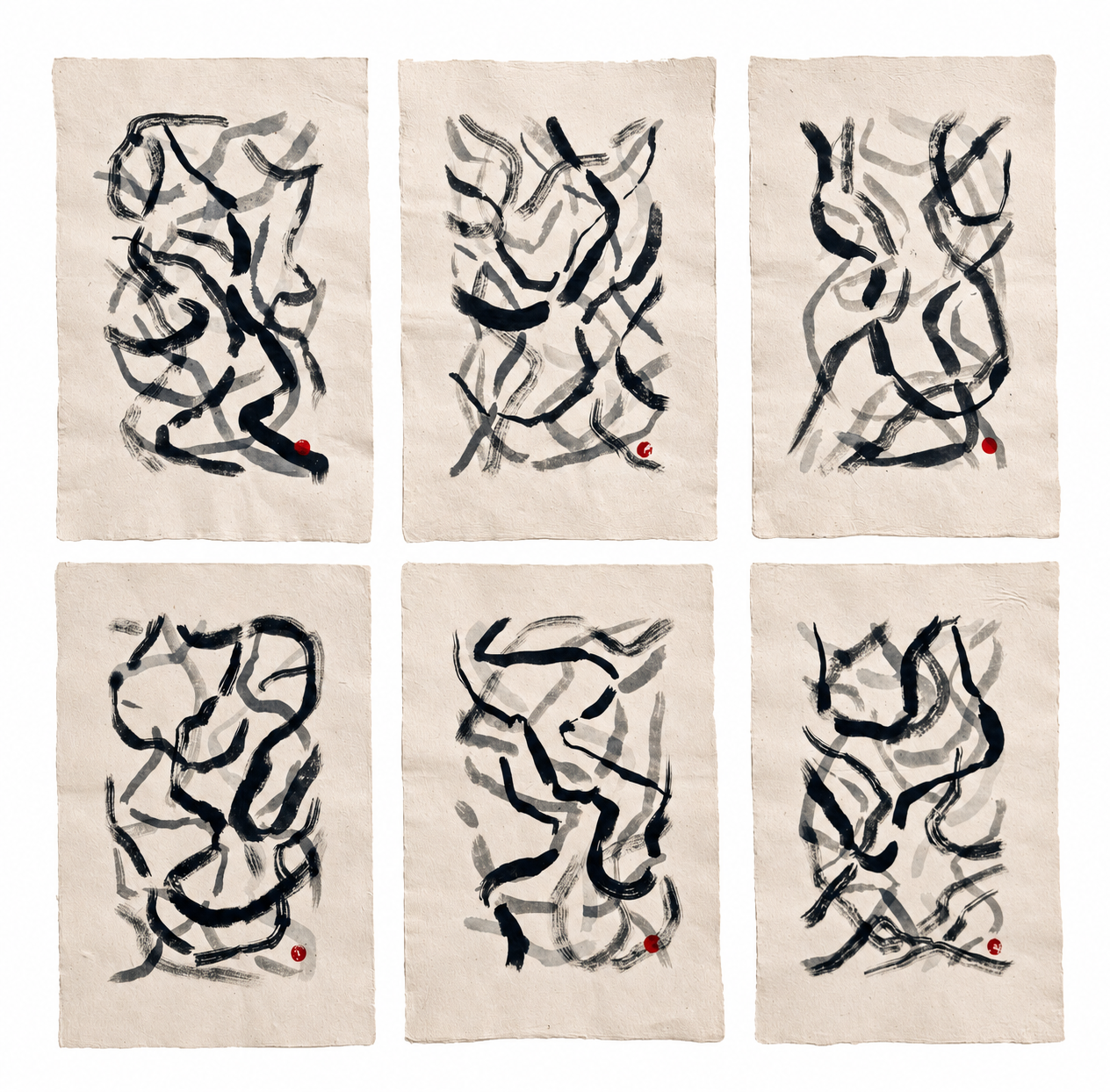
BROKEN LINE: Where the surface resists
Broken Line emerged from moments of interruption, uncertainty, and adjustment. The fragmented marks reflect experiences of encountering resistance—within materials, circumstances, expectations, and oneself. The line no longer moves freely but becomes interrupted, redirected, or forced to adapt.
The title refers both to the physical behaviour of ink on handmade dó paper and to the realities of navigating change. Relocation often involves confronting unfamiliar systems, cultural differences, practical challenges, and periods of instability. These experiences are echoed through marks that hesitate, fracture, and reassemble themselves across the surface.
Rather than viewing resistance as an obstacle, the suite explores it as a generative force. The breaks within the line become opportunities for redirection and transformation. Through these interruptions, new pathways begin to emerge.
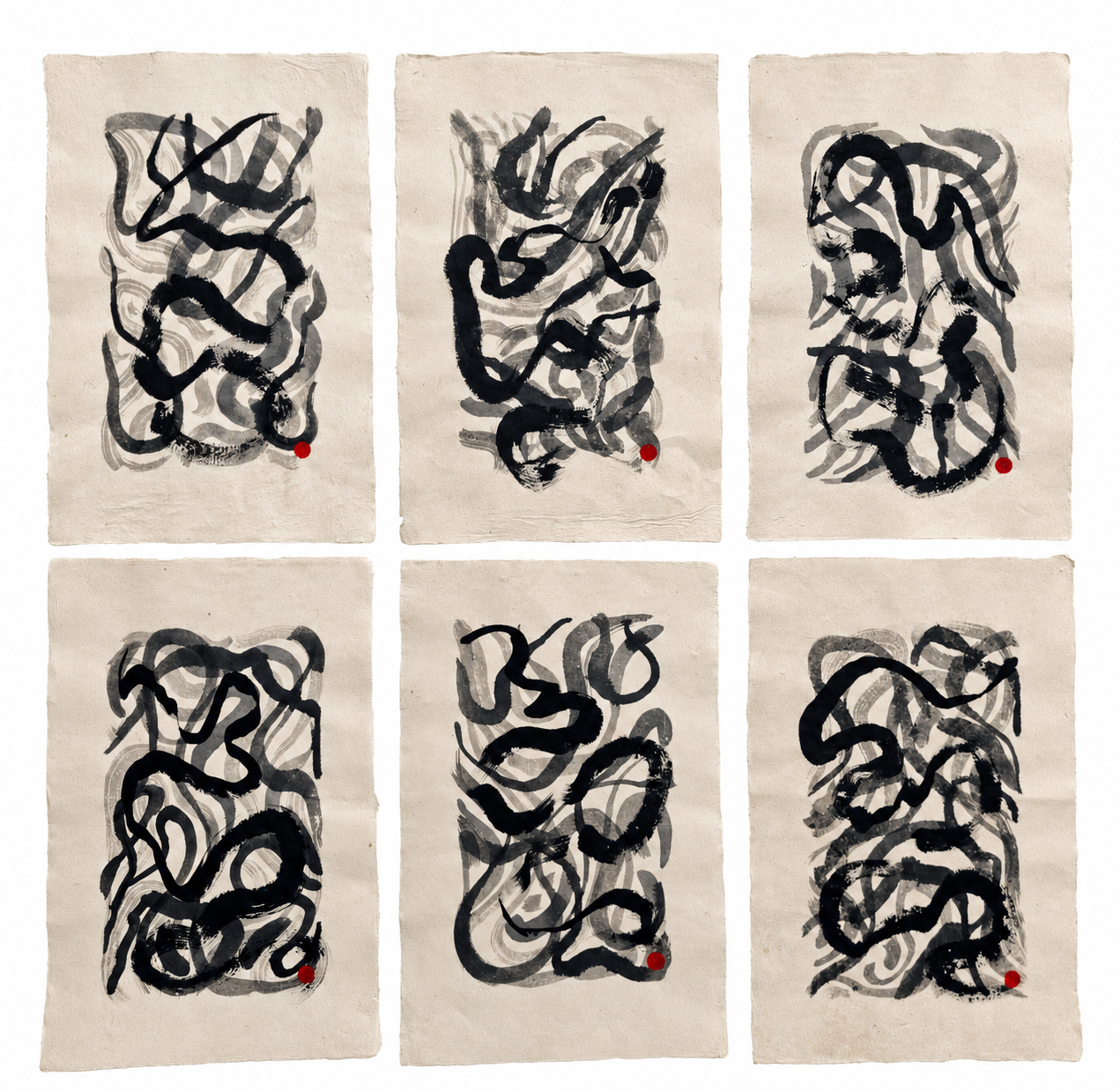
DENSE MEMORIES: What remains
This suite examines accumulation—of experiences, impressions, encounters, and memories gathered over time. Following the openness of earlier works, the surface becomes increasingly layered and concentrated. Marks overlap, repeat, and cluster together, creating fields of visual density that suggest the way memories settle within us.
Created after spending more time in Vietnam, the works reflect a growing sense of connection to place while simultaneously carrying traces of what came before. New experiences do not replace older ones; instead, they gather alongside them, creating complex layers of association and meaning.
The gestures within these works can be understood as fragments of movement, observation, and recollection. Some remain visible while others become partially obscured. The suite reflects the way memory operates—not as a fixed archive, but as a living and shifting accumulation of experiences that continue to shape how we see ourselves and the world around us.
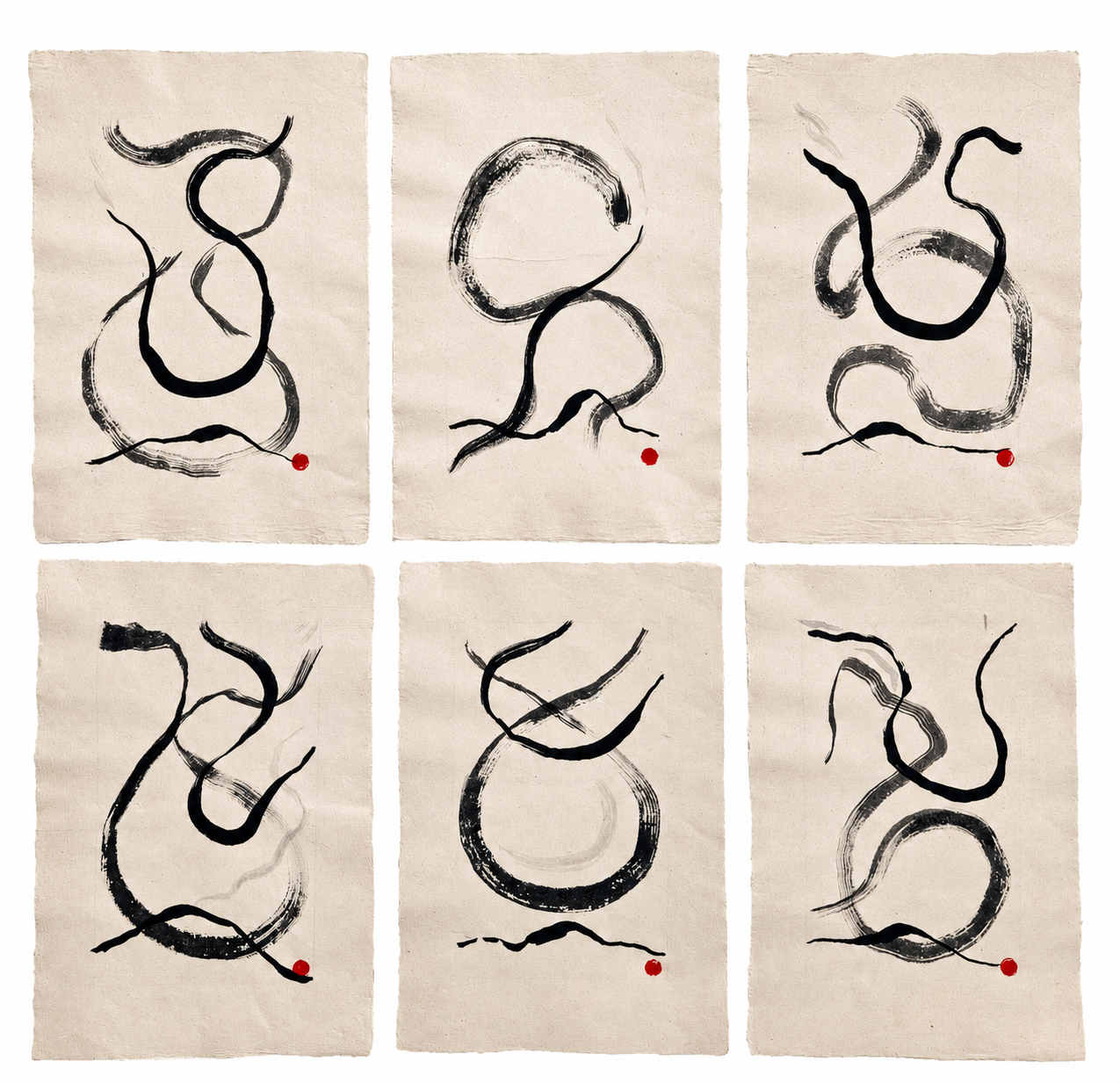
OPEN BREATH: Learning stillness
Open Breath: Learning Stillness reflects a gradual shift from searching and responding towards acceptance and presence. Created as life in Vietnam began to find a more familiar rhythm, the suite explores the practice of remaining grounded amidst uncertainty, change, and the continual arrival of new experiences. While relocation brought excitement and discovery, it also brought moments of overwhelm, doubt, and disorientation. These works emerged from learning not to resist those challenges, but to meet them with greater awareness, patience, and trust.
The gestures in this suite are more open, spacious, and restrained than those in earlier works. The surrounding space becomes as important as the marks themselves, suggesting moments of pause, breath, and reflection. For me, learning stillness is not the absence of movement or difficulty, but the ability to acknowledge uncertainty while returning to a place of calm within oneself. Within the broader journey of East of My Name, this suite represents a moment of arrival—not at a destination, but within the experience itself.